Executive summary
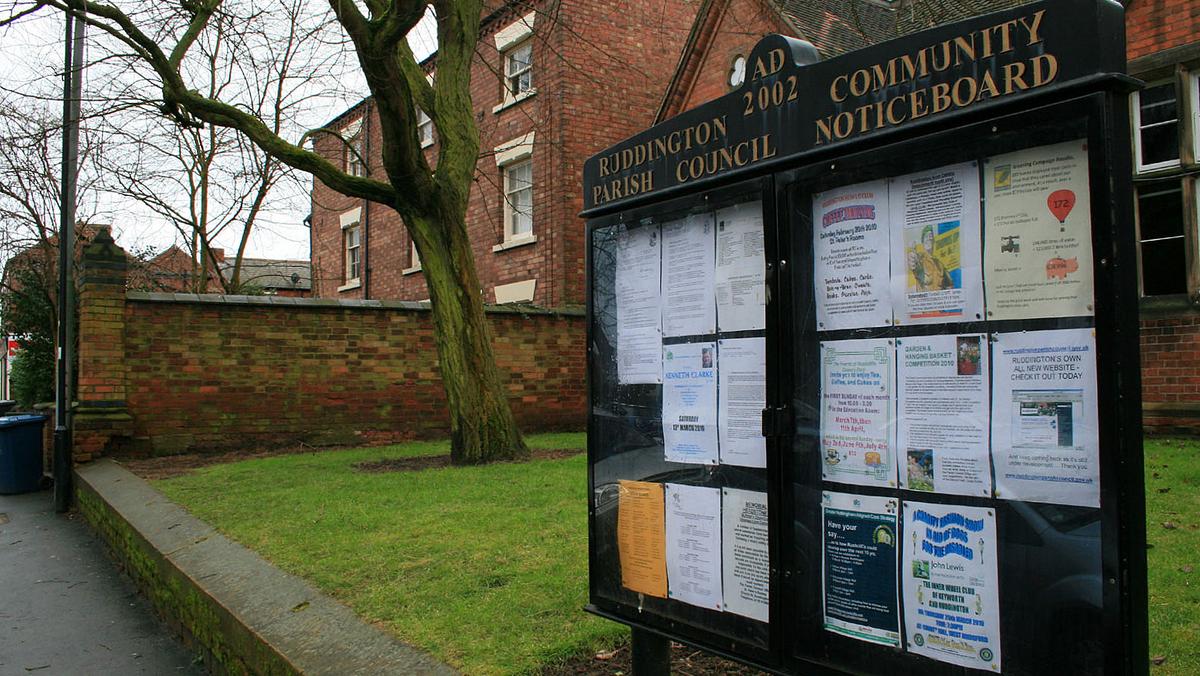
Parish councils are the most localised form of government in England, with responsibility for managing and delivering a range of hyper-local services and amenities:
- England has around 9,000 parish and town councils, covering approximately 91 per cent of the land area but only around 36 per cent of the population. This is estimated to equate to almost 21 million people being covered by parish councils.[1]
In recent years, their remit has expanded, largely as a result of higher-tier authorities devolving responsibilities to them amid increasing financial pressure. However, this trend has not been accompanied by adequate oversight, financial controls or governance reform.
READ THE FULL RESEARCH PAPER
While parish councils can play a constructive role in supporting community development and democratic participation at the local level, their growing tax burden warrants increased scrutiny. Parish precepts – the portion of council tax allocated to parish councils – have risen substantially in both nominal and real terms:
- In real terms, parish precepts raised more than £800 million in 2024-25, a 43 per cent increase from the amount raised in 2015-16. At the same time, the average band D parish precept has risen from £75 to £88 in real terms, an 18 per cent increase.[2],[3]
- Bolsover is the local authority with the highest parish council tax precept as a proportion of their total band D council tax. On average, 8.5 per cent, or £198, of council tax goes to parish councils in Bolsover.
- Wharton in Westmorland and Furness had the highest nominal parish precept percentage increase between 2023-24 and 2024-25 rising from £1.67 to £31.45.
- South Kirkby and Moorthorpe parish council in Wakefield had the largest parish precept in 2015-16 at £319. Since then, the council has cut their precept to £275. Comparatively, Falmouth parish council in Cornwall had the highest parish precept in 2024-25 with a precept of £431. This is a 57 per cent increase in real terms from the level in 2015-16.
- Somerton in Somerset recorded the largest increase in parish precept between 2015-16 and 2024-25, both in nominal and real terms, among councils with an initial precept above £10. The precept rose from £10.48 in 2015-16 to £292.33 in 2024-25, a nominal increase of 2,690 per cent and a real-terms rise of 2,006 per cent.
- In terms of a regional outlook, from 2015-16 to 2024-25, the East Midlands saw the largest increase in average parish precepts with a 73 per cent increase in real terms.
The examples demonstrate that in the absence of caps on precept increases, there is a risk that parish councils could become a costly and poorly regulated tier of local government.
This report examines the expansion of parish council duties, the financial implications for residents, and the variation in governance and accountability structures. To ensure that parish councils operate transparently, efficiently and in the best interests of taxpayers, this report recommends two core reforms:
- The introduction of a cap on parish council precept increases, consistent with the restrictions applied to other tiers of local government.
- The strengthening of accountability mechanisms for parish councils, including expanding oversight by the Local Government and Social Care Ombudsman (LGSCO) and enhancing electoral legitimacy.
Without these reforms, the current trajectory of parish councils acquiring more responsibilities and raising precepts unchecked could lead to increasing costs for taxpayers, diminished democratic accountability and further fragmentation in the delivery of local services.
READ THE FULL RESEARCH PAPER
[1] Office for National Statistics, Analysis of population estimates tool for UK, 23 November 2023, www.ons.gov.uk/peoplepopulationandcommunity/populationandmigration/populationestimates/datasets/analysisofpopulationestimatestoolforuk, (accessed 8 May 2025).
[2] Ministry of Housing, Communities and Local Government, Council Tax statistics for town and parish councils in England: 2024 to 2025, 8 May 2024, assets.publishing.service.gov.uk/media/6639fb878603389a07a6d14b/2024-25_Local_precepting_authorities_in_England.ods, (accessed 7 May 2025).
[3] Ministry of Housing, Communities and Local Government, Council Tax statistics for town and parish councils in England: 2016 to 2017, 29 June 2016, assets.publishing.service.gov.uk/media/5a82f2f4e5274a2e8ab5a2ce/Local_precepting_authorities_in_England_2016-17.xlsx, (accessed 7 May 2025).