by Benjamin, Byung Hoon, Ko, political commentator
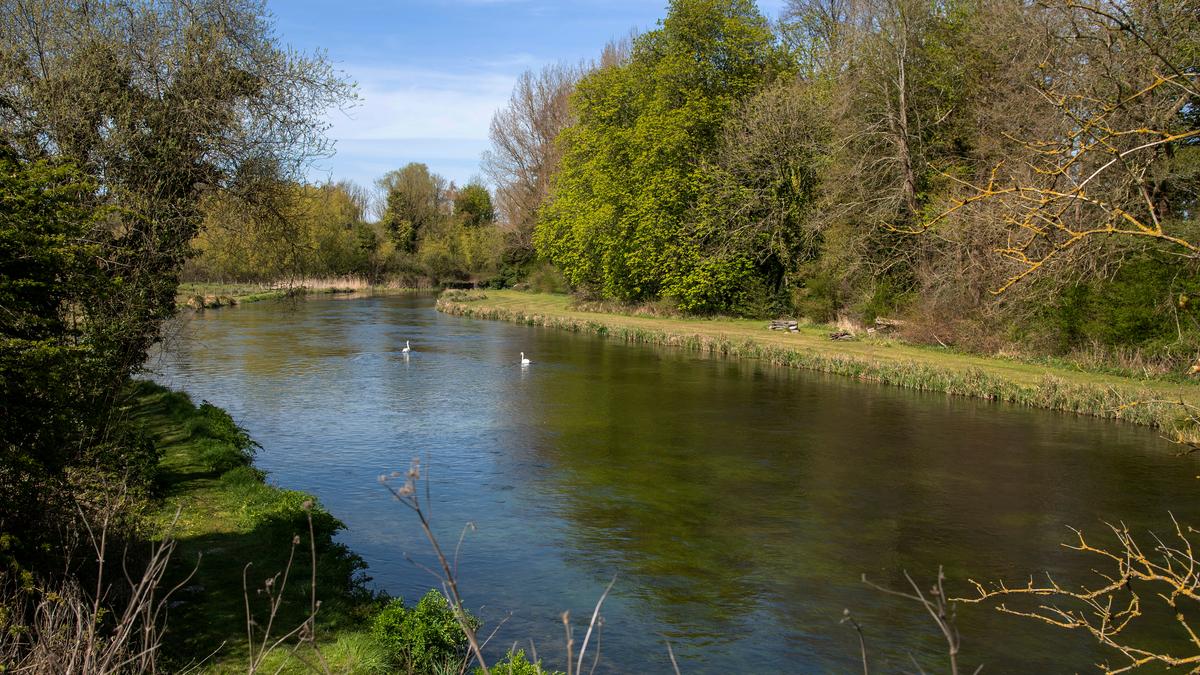
If you want an example of how Britain’s quangos are failing taxpayers, look no further than the Environment Agency (EA). Supposedly it works “to create better places for people and wildlife, and supports sustainable development”. In fact it is doing significant harm. Just look at what is happening to one of Britain's greatest natural features under its remit, chalk streams. Chalk streams are to England what rain forests are to the tropics: rare, fragile, and globally unique. Chalk streams are a quintessential part of the English landscape, with England being home to 85 per cent of the world’s chalk streams, ecologically being unique as tropical rain forests. The streams hold immense environmental and cultural importance in England; it is home to fish such as the brown trout, they manage to naturally filter the water, and prevent soil erosion. They are also woven into English culture, from fly fishing to the literary landscapes of Gilbert White and Ted Hughes.
Yet, despite being at the centre of English rural identity, many chalk streams are now in crisis due to sewage pollution, over-abstraction, and bureaucratic neglect. To combat this, most political and media solutions call for more funding and increased power for the EA. It’s an easy, one-size-fits-all solution, despite a poor track record and mounting costs to taxpayers. It is clear that this system does not work, as the high burden on taxpayers does not necessarily correlate to the improvement of the chalk streams.
The continuing degradation of the streams, exacerbated by the EA's inefficiency, makes a powerful case for localism over statism and the abolition of the EA. Empowering landowners, charities, and local community groups would enable more effective management of these precious waterways, costing far less public money. Only through such local stewardship can we truly restore the glory of our cherished English chalk streams.
Central regulation, via the EA in the case of chalk streams, is expensive and ineffective. The EA had a staggering £2 billion total budget in 2024-25, rising up to £2.27 billion for 2025-26. That £2 billion could fund hundreds of community-led restoration projects across the country. But instead, it’s absorbed by Whitehall bureaucracy with little to show for it. In 2023, raw sewage was discharged into chalk streams for nearly 50,000 hours, and in 2024, serious pollution incidents by water companies surged by 60 per cent.
While some advocate for even more rules and greater enforcement through larger regulators, the reality on the ground tells a different story. Regulation has indeed expanded, and the EA's budgets have swelled, yet the health of our rivers continues to decline. The problem isn't insufficient law, but rather a profound lack of effective implementation. Tellingly, there's no evidence to suggest that increased EA funding correlates with a decrease in pollution; in some cases, the opposite trend is observed. This reveals a critical misalignment in the EA's priorities, as its resources are often directed towards major urban water infrastructure, leaving fragile rural chalk streams neglected.
The EA’s top-down bureaucracy fails locals. Chalk streams require context-sensitive understanding, and local knowledge to protect, as they are so intertwined with the local rural environment and culture. The EA’s blanket, top-down strategies completely ignore this. They attempt to connect with the local knowledge via regional offices, but they are often under-resourced, and still lack detailed familiarity with local ecosystems. Even if locals actively wanted to improve their chalk streams, they would still have to apply via the EA, which its bureaucratic measures further disincentivises action – long application processes, inconsistent enforcement, and overlapping responsibilities with DEFRA, Natural England, and Ofwat, all clearly portrays the significant inefficiency of state-centred conservatism, despite their staggering budget. Over £800 million is spent annually on environmental regulation, and yet it causes more over-abstraction, bureaucracy, and disincentivising.
In contrast to the inefficiency of statism, the few cases of local stewardship makes a compelling case for cheaper and more effective means to restore England’s chalk streams. The River Glaven restoration project only used £130,000 in total, with EA contributing only £70,000. The result was a significant improvement in water quality improvement and habitat restoration, also leading to an impressive 1:325 cost-benefit ratio. The same can be said for the restoration cases of River Yare and Foston Beck, with the EA contributing a minor sum (or even not at all), and the projects mainly being driven by the locals. As seen above, typical community-led projects cost just £15,000-300,000, and deliver improvements within months.
By contrast, the EA burns through hundreds of millions annually, with poor delivery and little accountability. This is because local groups have the incentive, knowledge, and flexibility to act fast and effectively. But beyond cost and speed, there is a moral difference too: when local communities take responsibility for their own ecosystems, they build pride, long-term care, and environmental awareness in a way remote bureaucracies never can. Funding a national network of community trusts could restore far more chalk streams, for a fraction of what the government spends, by squeezing out taxpayers’ money.
The solution to the problems caused by the statist structure that plagues our environment and burdens taxpayers is simple - abandon it. The case of England’s chalk streams offers compelling, undeniable proof. Here, a conservative, taxpayer-friendly solution - a bottom-up approach - has repeatedly proven effective, embodying principles such as fiscal responsibility, localism, and minimal government interference.
Instead of propping up the failing Environment Agency directly and allowing it to waste billions on inefficacy, the government should distribute a significant portion of EA funds for direct disbursement to local river trusts and landowner groups. Reforming the regulatory framework to focus on property rights, enforceable liabilities, and outcome-based grants would also empower locals to take personal pride and responsibility for their own environment, free from bureaucratic discretion.
The funds previously absorbed by the EA could instead be spent to reward local innovation and involvement, driving genuine environmental improvement. The result of such bold policies will be not only cleaner waterways like our precious chalk streams, but also stronger civic engagement and significantly reduced costs for taxpayers across the board.
To truly fix England’s environmental woes, and to alleviate the burden on taxpayers, we don’t need more state spending or new, stricter regulations, we simply need the state, in the form of the Environment Agency, to get out of the way. With the right incentives and direct funding, local communities can revive England’s most unique and endangered ecosystems, improve our wider environment, and do so without expanding the bureaucratic blob. We have seen it work before, with cases such as the River Yare, and Foston Beck.
Less bureaucracy and wasteful centralisation leads to less cost on taxpayers, and a cleaner, healthier English environment. It’s time to abolish the Environment Agency and embrace an environmentalism that delivers moral clarity, local accountability, and genuine value for money, without the waste, delay, or overreach of centralised control.