
by Jonathan Eia, researcher
The Treasury committee has released its report into the Lifetime ISA (LISA), following a request to examine the scheme’s continued relevance and effectiveness. Initially introduced by then Chancellor George Osborne in 2016 and launched in 2017, the LISA was designed with two main purposes: to help individuals save for a first home and/or for retirement.
Eligible individuals have been able to open a LISA and save up to £4,000 in the account each tax year. The government provides a 25 per cent bonus on contributions, meaning those who save the maximum amount receive an additional £1,000 per year. The bonus is paid annually, significantly boosting savings potential, at least in theory.
Funds in a LISA can be withdrawn without penalty under two circumstances: to purchase a first home worth up to £450,000, or once the account holder reaches the age of 60. Withdrawals for any other reason incur a 25 per cent government-imposed penalty, which often results in the saver losing not only the bonus but also some of their original contribution.
The report found that the dual-purpose nature of the LISA introduces complexity, increasing the risk that consumers may adopt unsuitable investment strategies. There is widespread confusion surrounding the withdrawal rules, and individuals withdrawing funds in emergencies may face unexpectedly large penalties. Moreover, the report suggests the LISA may divert savers away from more efficient pension schemes, which offer greater long-term benefits and more flexible tax advantages.
However, more fundamentally, the caps placed on the LISA have gradually made the scheme less viable. Savers who use the scheme as intended may still end up paying the penalty, financially and practically, as key thresholds remain frozen while the economic landscape shifts around them.
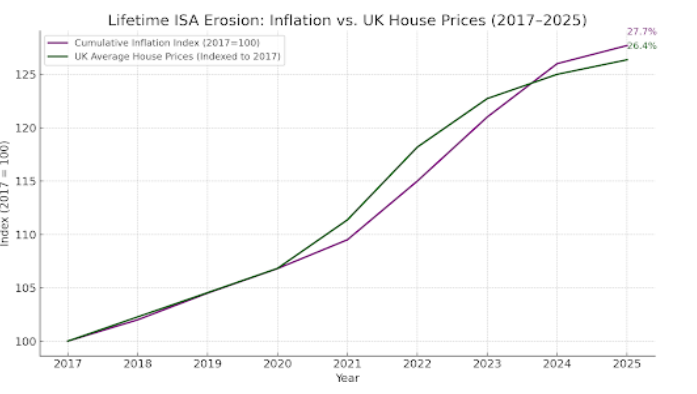
Since the scheme's launch, inflation has risen by nearly 28 per cent, meaning that the £1,000 government bonus now holds a real-world value of just £783. Meanwhile, house prices have increased by over 25 per cent, yet the £450,000 property cap has remained static. If this cap had risen in line with inflation, it would now stand at over £600,000. This discrepancy is particularly problematic for first-time buyers in London and the South East, where exceeding the cap by even £1 disqualifies them from using their LISA savings without penalty.
Withdrawing funds from a LISA for any reason other than purchasing a first home or accessing retirement savings at age 60 comes with a steep cost. Savers don’t just lose the government bonus, they face a 25 per cent charge on the entire amount withdrawn. This equates to a 6.25 per cent loss on their own contributions, making the scheme particularly punishing for those who require financial flexibility or whose personal circumstances have changed unexpectedly.
Over the six tax years up to 2023–24, HM Treasury has collected approximately £213 million in withdrawal charges from around 286,000 individuals who made unauthorised withdrawals. In the 2023–24 financial year alone, £75 million was paid in withdrawal charges, a 39 per cent increase compared to the previous year. The average value of an unauthorised withdrawal was around £3,000, highlighting that many users are being penalised for relatively modest sums.
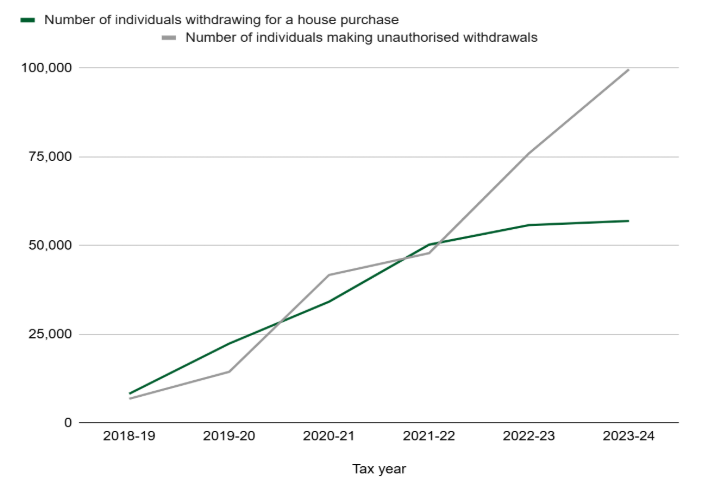
In 2023–24, 99,650 people made unauthorised withdrawals from their LISA, while only 56,900 used their accounts to purchase a home. The proportion of individuals making unauthorised withdrawals has grown significantly, from 45 per cent in 2018–19 to 64 per cent in 2023–24. Meanwhile, the share of total LISA holders paying the withdrawal charge rose from 5 per cent in 2021–22 to 7 per cent in 2023–24.
This increasing trend in withdrawal charges suggests deeper issues with the usability of the scheme. For many savers, the lack of flexibility and high penalties are not just inconvenient, they are actively discouraging the use of the LISA as a practical long-term savings tool.
A critical issue raised in the Treasury Committee's report is whether the LISA remains the most suitable savings platform conceptually for consumers. Several expert witnesses highlighted the fundamental challenge of using a single financial product to serve two very different goals: buying a first home and saving for retirement. These objectives require distinct investment strategies, and combining them within one account can lead to suboptimal outcomes for savers.
The Committee heard that managing short-, medium-, and long-term financial goals within a single product significantly increases the risk for consumers. Financial campaigner Martin Lewis clearly illustrated this point, stating: “The right thing to do when you are saving as a first-time buyer is to put it in cash. The right thing to do if you are saving for your retirement is to have it in equities.” The dual-purpose design of the LISA can therefore lead to poor asset allocation, as savers are left to navigate complex investment decisions without sufficient clarity or support.
The LISA is increasingly seen as an outdated solution to the broader problem of housing access. If the government is genuinely committed to helping first-time buyers, then efforts must go beyond savings products and address the structural issues on the supply side of the housing market. This includes reforming planning laws to allow for more building and offering stronger incentives to developers, such as easing tax burdens, so that housing supply can begin to meet growing demand